
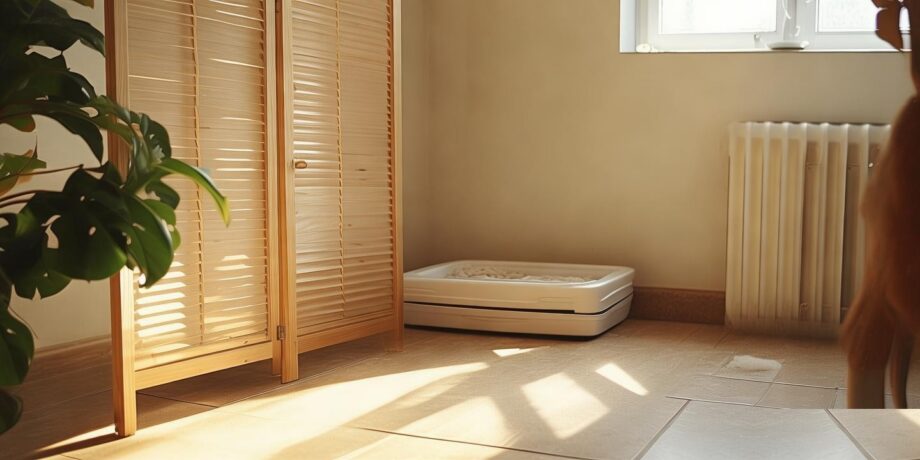
The short version: in a small apartment, the best litter box spot is a low-traffic corner with two escape routes, at least 6 feet from food and water, on a hard floor you can wipe — usually the bathroom, a closet floor near the entry, or a living-room corner hidden by a folding screen. The spot matters more than the box: a 470-comment thread on r/CatAdvice about litter box placement filled up with owners whose cats refused the box after a move to a “convenient” spot, and most solved it by relocating, not replacing gear.
Below are the placement rules cats actually follow, the 7 spots that work in tight floor plans, the 4 that quietly cause litter-box avoidance, and the low-cost gear that keeps a small space from smelling like one.
The 4 Rules Every Litter Box Spot Must Pass
Cats choose toilet spots the same way their wild ancestors did: they want to see trouble coming while being hard to see themselves. Any location you’re considering should pass all four checks below. If a spot fails even one, keep looking — a cat who feels trapped or exposed in the box will find a laundry basket instead, and that habit is much harder to undo than a placement mistake.
- Two exit routes, minimum. A boxed-in corner or the end of a narrow hallway gives a cat one way out. In multi-cat homes this is the #1 cause of box-blocking, where one cat ambushes another exiting the box.
- Quiet but not isolated. Next to a washing machine, a TV wall, or a slamming door makes the box a scary place. A fully dark dead-end closet makes it a trap. Aim for the middle ground: a quiet corner the cat can still see activity from.
- Distance from food and water. Cats hard-wire against eating near their toilet. Keep the box at least 6 feet (2 meters) from bowls — in small apartments this usually means different rooms, or at least opposite ends of the longest wall you have.
- Hard, wipeable floor underneath. Carpet under a box soaks odor into the pad within weeks and doubles your cleaning time. Tile, vinyl, or sealed wood corner spots are the ones that stay livable.
7 Best Litter Box Spots in a Small Apartment
Small floor plans trade space for creativity. These are the seven placements that consistently work in studio and one-bedroom apartments, roughly in order of how well they satisfy the four rules above.
1. The Bathroom
The default answer, and usually the right one. Tile floor, easy to clean, a door that provides odor containment, and plumbing nearby for scooping. Two cautions: don’t put the box directly beside the toilet if the lid slams, and if your bathroom has an exhaust fan, run it after scooping rather than leaving it running constantly — some cats refuse boxes under a constant fan draft.
2. Entry Closet or Coat Closet Floor
A closet with a sliding or lightly closed door is a genuinely great compromise: hidden, quiet, low-traffic. Leave the door open an inch or install a cheap magnetic catch so it never latches fully — a self-closing door that traps a cat inside once can end that spot permanently. Put a washable mat under the box; closet carpet is usually cheap glue-down and holds odor fast.
3. A Living Room Corner Behind a Folding Screen
If your bathroom is tiny, a corner of the living room behind a $20–40 folding screen or a tall plant passes all four rules: two exits around the screen, open sightlines, hard floor. Choose a screen the cat can see over or around from inside — total visual blocking turns the corner back into a trap.
4. Beside (Not Inside) a Storage Cabinet or Sideboard
The gap between a sideboard and the wall, or the dead zone beside a kitchen cart, gives the box overhead cover while keeping both ends open. This mimics the “edge of the room” spots cats pick outdoors. Measure first: cats want at least 1.5× their body length of clear runway on at least one side of the box.
5. Under a Console or Hallway Table
A console table with 24+ inches of clearance turns unused vertical space into a covered box spot. Check the clearance against your cat’s height sitting in the box — a tall cat in a covered box under a low table feels doubly boxed-in. This spot pairs well with an open-top box, which brings more airflow and less trapping than a hooded one.
6. Bedroom Corner (With One Trade-off)
If you’re out all day, a quiet bedroom corner is low-traffic during the hours your cat uses it. The trade-off is obvious: it’s your sleeping space. It works best with an open-top box, daily scooping, and a large litter mat to catch tracking — like the double-layer litter mat, whose honeycomb pockets trap granules before they reach your sheets.
7. The Far End of the Kitchen (Conditional)
Ranked last because it needs discipline: it only works if the box sits at the opposite end of the room from all food areas, ideally with a cart or island between. Kitchens usually have great hard floors and airflow, but they’re high-traffic during cooking hours, and some cats won’t toilet where humans eat no matter how you arrange it. Try it only if nothing else fits.
4 Spots to Avoid (and Why They Backfire)
These placements account for most of the “cat suddenly stopped using the box” posts in placement threads. All four fail at least one of the rules above, and the failure usually shows up weeks later as avoidance or spraying — which owners then misread as a litter or box problem.
- Next to loud appliances. Washers, dryers, and dishwashers hit the box with vibration and sudden noise mid-use. A cat startled once in the box re-thinks the location; startled twice, it quits the box.
- Right beside food and water bowls. Even in a studio where everything shares one wall, use the longest diagonal the apartment offers. Eating beside a toilet is the fastest way to reduce both food intake and box visits.
- A dead-end corner or closed room. Single-exit spots feel like traps, especially with two cats. If the only option is a small closed room like a utility closet, install a cat flap or prop the door so it can’t swing shut.
- Balconies and unheated entryways. Temperature swings, wind-borne litter, rain through an open slider, and (critically) a door that may close — balconies fail the safety checks, and in winter an icy balcony box is simply unusable. If yours is fully enclosed and temperature-controlled, treat it like any indoor room and apply the four rules.
The $35 Setup That Keeps a Small Apartment Livable
Placement solves the cat’s problem; the right three-piece setup solves yours — odor, tracking, and cleaning time. This is the full list of gear that earns its floor space, and nothing on it costs more than $15.
| Item | What it does | Typical price |
|---|---|---|
| Double-layer litter mat | Traps tracked granules in honeycomb pockets; lift and dump weekly | $8–11 |
| Large waterproof mat (for open corners) | Extends coverage under and around the box on hard floors | $10–15 |
| Stainless steel scoop | Doesn’t hold odor or flex like plastic; solid clumps come out in one pass | $13–15 |
Sizing rule for small spaces: the mat should extend at least one box-width in front of the box’s opening — that’s the exit path where most litter leaves the box. A large waterproof mat under a corner setup catches both tracking and any spray-miss without soaking the floor underneath. And upgrade the scoop once, not repeatedly: a stainless steel scoop outlives several plastic ones and makes daily scooping a 30-second job instead of a scraping chore — which is the single biggest odor control in a small apartment, because odor is mostly about frequency, not fragrance.
How to Move an Existing Box Without Breaking the Habit
Found a better spot but your cat already uses the current one? Move gradually. Shift the box 1–2 feet per day toward the new location over a week or so, keeping the old orientation until the final move. If your cat follows the box each day, you’re fine. If it starts using the old spot’s floor instead, you’ve moved too fast — put the box back, wait three days, and slow the pace by half. Never move the box and switch litter brands in the same week; change one variable at a time so you can read which one caused any protest.
Frequently Asked Questions
How many litter boxes do I need in a small apartment?
The standard rule is one box per cat plus one spare. In small apartments, owners often can’t fit the full count — in that case, one generously sized box per cat in different spots beats two boxes side by side. Two boxes in one location don’t count as two locations; a cat that feels ambushed at the single spot needs a second exit, not a second box.
Is it okay to put a litter box in the bedroom?
Yes, with conditions: daily scooping, an open-top box for airflow, a large mat for tracking, and at least a few feet between the box and the bed. Cats often prefer the bedroom because it carries their owner’s scent and is quiet at night. The objection is usually the human’s, and consistent scooping plus the mat setup above solves most of it.
Do covered litter boxes help in small apartments?
Covered boxes hide the box visually and contain some kick-out, but they concentrate odor inside, which makes cats use them less unless you scoop even more often. For tight spaces, an open box behind a screen or inside a closet niche usually outperforms a covered box — better airflow, easier 30-second scooping, and less trapping anxiety for multi-cat households.
How far should the litter box be from food and water?
At least 6 feet (about 2 meters), with a wall or furniture between when possible. In a true studio where that’s impossible, maximize the distance you have and separate the zones with a screen or low shelf — the visual barrier matters nearly as much as the raw distance.
My cat stopped using the box after I moved it. What now?
Restore the box to the last location the cat used reliably, then redo the move slower — 6–12 inches a day. If avoidance continues at the old spot too, the issue may not be placement: stress, litter texture, or a urinary problem can all present as box avoidance, and a cat straining or crying in the box needs a vet within days, not weeks. For kittens still learning the basics, our step-by-step litter training guide covers the full schedule.