
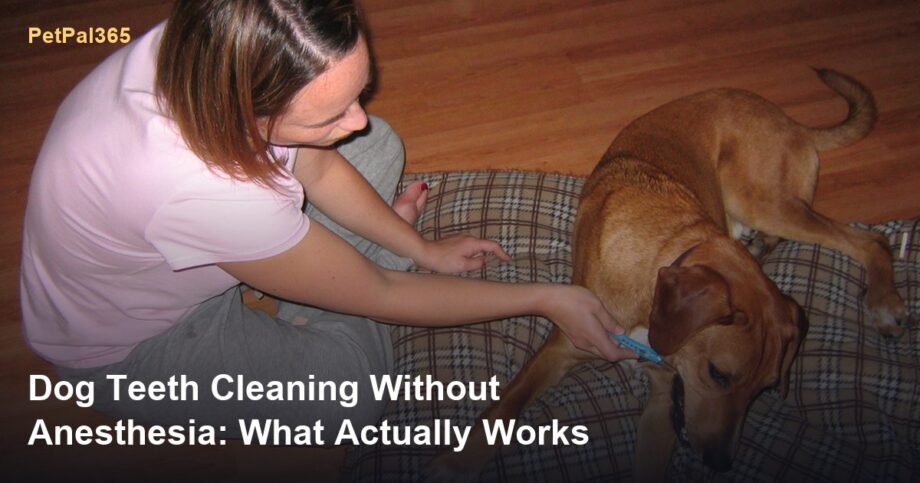
The scariest reply in a 309-upvote r/dogs thread about teeth brushing (731 comments and counting) isn’t about plaque — it’s an owner describing their dog’s heart stopping during an anesthetic dental cleaning. That story, and hundreds like it in the same thread, is why “dog teeth cleaning without anesthesia” gets searched constantly. The honest answer: you can absolutely prevent most dental disease at home without a single drip of anesthesia, but the $100–$300 “anesthesia-free cleaning” being sold at groomers is not the way to do it. Here’s what actually works, what’s a waste, and when the vet visit is unavoidable.
The Quick Answer
Three things genuinely control plaque and tartar at home: daily brushing with a dog-safe toothpaste, VOHC-accepted dental chews, and starting before tartar hardens. Everything else — sprays, “tartar dissolving” gels, water additives without the VOHC seal — has little to no controlled evidence behind it. And the anesthesia-free cleanings offered at grooming shops only scrape the visible crown, while the disease that actually costs you money lives below the gumline, where nobody can reach a conscious dog safely.
Think of it this way: one professional anesthetic cleaning costs $300–$1,000+ in the US right now (vet pricing threads on Reddit show routine care up roughly 30% in two years). A full year of home prevention costs $70–$150. Prevention is the real “no-anesthesia dental plan,” and it’s the only one backed by veterinary dentists.
Why “Anesthesia-Free” Cleanings Only Fix What You Can See
Non-anesthetic dental cleaning (NAD) is legal in most states and popular because it looks impressive — a technician scrapes visible brown tartar off the crowns while your dog sits in their lap. The problem isn’t the scraping. The problem is where periodontal disease actually happens: below the gumline, in the pockets between tooth root and bone. The American Veterinary Medical Association and veterinary dental colleges are blunt about this — without dental X-rays and subgingival cleaning, you cannot diagnose or treat the disease, only the cosmetic layer on top.
Worse, a clean-looking crown after a NAD session can actively hide progression. Owners see white teeth, assume the problem is solved, and skip the exam that would have caught a diseased root — until the dog stops chewing on one side or a tooth fractures. That’s how a $150 grooming add-on turns into a $1,500 extraction surgery later. If a conscious cleaning is the only thing your dog can medically tolerate, it’s better than nothing — but go in knowing it’s cosmetic maintenance, not treatment.
What Actually Works at Home
1. Daily brushing (or at minimum, 3 times a week)
Brushing is the only method with decades of controlled studies behind it, and the effect is dose-dependent: once a day beats three times a week, which beats occasionally. Use a dog-specific enzymatic toothpaste — never human toothpaste, since fluoride isn’t meant to be swallowed and xylitol is outright toxic to dogs. For dogs who hate a long-handled brush, a finger brush is the beginner-friendly route because it feels more like petting than a procedure. A 360° silicone finger toothbrush ($5.25) covers all tooth surfaces at once, which matters when your window of cooperation is about eleven seconds. If you’ve never trained it, our step-by-step dog teeth brushing guide breaks the first week into taste-then-touch stages.
2. VOHC-accepted dental chews as the backup system
The Veterinary Oral Health Council (VOHC) awards its seal only to products that passed controlled plaque or tartar studies. That seal is the single easiest quality filter in pet dental care. A chew a few times a week won’t match brushing, but it meaningfully slows tartar between sessions — and for a dog who will never, ever accept a toothbrush, it’s the best evidence-based compromise. Chews also carry a hidden bonus we hear about constantly: durability. Aggressive chewers shred “dental” chews in seconds, so pick one rated for powerful jaws — the chew toy built for aggressive chewers ($6.24) is the style that lasts long enough to actually do dental work.
3. A travel kit so the routine survives real life
The number-one reason brushing fails isn’t the dog — it’s the owner’s schedule. A kit that lives in the car or travel bag removes the excuse. Disposable finger covers like the finger toothbrush pack ($14.15) work well for trips, boarding, or the groomer’s, where a shared brush isn’t practical.
What’s a Waste of Money
Dental sprays and “tartar-dissolving” gels
A spray can’t tell plaque from enamel, and no controlled trials show the marketed gels removing calculus. The visible “before and after” photos usually just show tartar staining, not the below-gumline disease state.
Water additives without the VOHC seal
Some VOHC-accepted additives exist — but the store-shelf majority are chlorhexidine or zinc solutions at concentrations too low to do anything except freshen breath for an hour. Read for the seal, not the word “dental.”
Hard natural chews: antlers, hooves, bones
This one backfires painfully. Veterinary dentists consistently rank antlers, hooves, and weight-bearing bones among the top causes of slab fractures in carnassial teeth — the exact $1,500 surgery you were trying to avoid. The rule of thumb: if you can’t indent it with your thumbnail, it’s too hard for teeth.
“Natural remedy” scale-removal tricks
Scraping tartar off your dog at home with a dental pick is the DIY version of the NAD problem — cosmetic, and now with added risk of chipping enamel or injuring gum tissue on a moving target. We cover this class of tempting-but-bad purchases in our broader guide to pet supplies not worth buying.
Real Costs: Prevention vs. Cleaning vs. Extractions
| Option | Typical annual cost (US) | What you get |
|---|---|---|
| Finger toothbrush (2 per year) | ~$10–$11 | Removes plaque before it mineralizes |
| Enzymatic dog toothpaste (2 tubes) | ~$10–$15 | Safe to swallow, breaks down plaque film |
| VOHC dental chews (3–4 per week) | ~$50–$120 | Slows tartar between brushings |
| Full home routine | ~$70–$150 | Prevents most disease below the gumline |
| Anesthesia-free “cleaning” | $100–$300 per session | Cosmetic crown scraping only |
| Anesthetic professional cleaning | $300–$1,000+ per event | X-rays, below-gumline cleaning, real diagnosis |
| Cleaning plus extractions | $1,000–$2,500 | What skipped prevention eventually costs |
For context on where vet pricing is heading, the monthly-cost breakdowns owners are sharing (our cat version walks the same math) show dental line items growing faster than almost anything else — see the honest monthly cost breakdown here.
When Your Dog Genuinely Needs the Anesthetic Cleaning
Prevention has a window. Once tartar has hardened into visible brown scale and gums are red or bleeding, no home routine reverses it — that’s veterinarian territory. Book the exam if you see: broken or loose teeth, bleeding gums, drooling or dropping food, chewing on one side only, pawing at the mouth, or breath that changed noticeably. And on the fear itself: anesthetic death in a healthy dog is genuinely rare — modern protocols with pre-anesthetic bloodwork, IV fluids, and monitoring put the risk far below the risk of untreated periodontal disease, which doesn’t just cost teeth but stresses the heart and kidneys. More than 80% of dogs over age three already have some degree of it. The anesthesia story in that Reddit thread is terrifying precisely because it’s rare; the chronic disease it prevents isn’t.
FAQ
Is non-anesthesia dog teeth cleaning safe?
The procedure itself is low-risk for injury, but it’s also low-value: it removes visible tartar only, can’t address disease below the gumline, and can delay real diagnosis. Most veterinary organizations consider it cosmetic. It’s reasonable maintenance for dogs who medically cannot handle anesthesia — not a substitute for veterinary dental care.
How can I remove my dog’s tartar without anesthesia?
You can’t remove established tartar at home — once plaque mineralizes, it takes professional scaling. What you can do is prevent new tartar: daily brushing with dog toothpaste plus VOHC-accepted chews. Starting early is the entire game.
How much does anesthetic teeth cleaning cost for dogs?
In the US, typically $300–$1,000 depending on region, dog size, and whether bloodwork and X-rays are included; extractions push the bill to $1,500–$2,500. A year of home prevention runs roughly $70–$150 by comparison.
Are dental chews as good as brushing?
No — brushing removes plaque mechanically at the gumline and has the strongest evidence. VOHC-accepted chews are a solid second line and the best option for dogs who won’t tolerate brushing, but they don’t replace it where it counts most.