
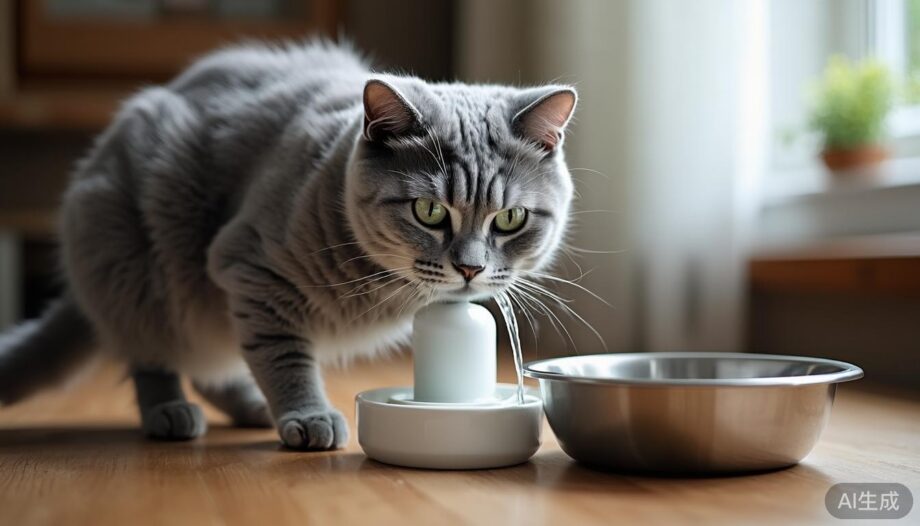
The Short Answer
For most cats, a water fountain is worth it — specifically if your cat ignores still water, has a history of urinary or kidney issues, or eats mostly dry food. For healthy cats that already drink plenty from a bowl, a basic stainless steel or ceramic bowl is perfectly fine and costs $90 less over three years.
Here’s the honest math: a quality 2.2L automatic water fountain costs $15–30 upfront plus roughly $25/year in filters and electricity — about $100–110 total over three years. A ceramic bowl costs $8–12 and lasts a decade. The $90 difference buys you one thing: moving water that many cats genuinely prefer to drink.
Whether that’s worth it depends entirely on your cat. The evidence below will help you decide in about five minutes.
Why the Bowl vs Fountain Debate Exists
Cats evolved as desert hunters who got most of their moisture from prey. That legacy lives on in two instincts that shape the bowl-vs-fountain decision:
- Stagnant water reads as “unsafe” to a cat’s instincts. In nature, still water collects bacteria; moving water is fresher. Many cats will drink from a dripping tap or a fountain while ignoring a full bowl sitting right next to it.
- Whisker fatigue is real. Deep, narrow bowls press against sensitive whiskers. Some cats drink less simply because the bowl is uncomfortable — a wide, shallow dish or a fountain stream solves this instantly.
Veterinary consensus is blunt on the stakes: chronic mild dehydration is a major driver of feline kidney disease and urinary crystals, two of the most common and expensive conditions in indoor cats. A cat that drinks 20% more water every day for its whole life meaningfully lowers that risk. The question is whether a fountain actually makes YOUR cat drink more — and for most cats that show any tap-drinking behavior, it does.
This is also why the fountain question comes up constantly alongside early-morning wake-ups: a cat that’s hungry and slightly thirsty at 3 a.m. is a cat that yowls. Hydration and feeding setup are the two levers that fix most night-time cats — a topic we cover separately in our guide to why cats wake you up at 3 a.m.
Fountain vs Bowl: The Side-by-Side Comparison
| Factor | Water Bowl | Water Fountain |
|---|---|---|
| Upfront cost | $8–12 (ceramic/steel) | $15–30 |
| 3-year total cost | ~$10–15 | ~$100–110 (filters + power) |
| Appeal to instinct | Low — still water, often ignored | High — moving stream triggers drinking |
| Freshness between cleans | Drops fast; dust and food crumbs collect | Circulated + carbon filtered |
| Oxygenation | None | Continuous; improves taste |
| Cleaning effort | Weekly scrub, 2 minutes | Weekly full teardown, 10–15 min |
| Whisker-friendly | Only if wide & shallow | Yes — drinks from the stream edge |
| Filters/electricity | None | ~$20–25/year |
| Noise | Silent | 20–35 dB hum; low-water hum if neglected |
| Power dependency | None | USB/battery — stops if unplugged |
| Best for | Heavy drinkers, multi-pet backup, budget homes | Picky drinkers, dry-food diets, senior cats |
The Real Cost Difference Over 3 Years
People compare the $12 bowl against the $22 fountain and call it a day. That misses most of the picture. Here’s the honest accounting:
- Bowl, 3 years: $10 bowl (you’ll replace one) + zero consumables = ~$10–15 total.
- Fountain, 3 years: $22 fountain + replacement filters every 2–4 weeks ($4–6 per 4-pack, ~$20/year) + about 2W of USB power (under $1/year) + one pump replacement at year two if you buy cheap ($8) = ~$90–110 total.
So the fountain runs roughly $25–30 per year more than a bowl. Now weigh that against the alternative: a single course of treatment for urinary crystals typically runs $300–1,500, and chronic kidney disease management costs thousands over a cat’s lifetime. If the fountain meaningfully raises your cat’s water intake, the math isn’t close. If your cat ignores the fountain entirely (it happens — roughly 1 in 5 cats don’t care), you’ve spent $90 on a countertop ornament.
Tip: don’t guess. The test in the FAQ below tells you which kind of cat you have before you spend anything.
Who Should Stick With a Bowl
Keep it simple and stay with a bowl if any of these describe your situation:
- Your cat already drinks well. You see regular trips to the bowl, urine clumps in the litter box are normal-sized, and your cat eats wet food (which is ~75% water already).
- You have multiple pets. A shared fountain gets dirty faster with two dogs and a cat crowding it. Two cheap wide bowls in different locations often beat one fancy fountain — and match the n+1 rule that also applies to litter setups in multi-cat homes.
- Your budget is genuinely tight. A $10 wide ceramic bowl refilled twice daily gets a healthy cat 95% of the way there. Money is better spent on wet food than on a pump.
- Nobody’s home to maintain it. A neglected fountain is worse than a bowl: biofilm builds in the pump lines within days and you’re serving bacteria-flavored water. Bowls tolerate neglect better.
Who Actually Needs a Fountain
Buy the fountain — don’t overthink it — if any of these are true:
- Your cat hunts for running water. Faucet-sitting, bathtub-dripping, toilet-drinking cats are telling you exactly what they want. This is the single strongest predictor that a fountain will work.
- Dry-food diet. Kibble is ~10% moisture. A dry-fed cat must drink dramatically more to compensate, and most don’t. Circulation and filtration make that extra drinking more appealing.
- History of crystals, FLUTD, or early kidney values creeping up. Your vet has already told you: increase water intake. A fountain is the cheapest tool for that job.
- Senior cats (10+). Thirst perception declines with age exactly when kidney risk rises. Anything that nudges intake upward pays for itself fast.
- Busy schedules. A 2.2L fountain holds about four days of water for one cat and keeps it circulating — far safer than a bowl that’s gone stagnant by hour 12 of your workday. It’s the same “cat stays comfortable while you’re out” logic as pairing a smart automatic feeder with a camera when you travel.
Common Mistakes People Make With Both
Whichever side you pick, these are the errors that quietly hurt cats:
- Plastic bowls for cats. Plastic scratches harbor bacteria and cause feline chin acne. Ceramic or stainless steel only.
- Bowl next to the food bowl. Cats instinctively avoid drinking near where they eat (prey-contamination instinct). Move water 2+ meters away and intake often rises with zero purchases.
- Buying a fountain and never cleaning it. Pumps die, biofilm wins, and the “fresh water” device becomes the dirtiest thing in the house. Budget 15 minutes weekly for a full teardown.
- Skipping filter changes to save $20/year. An exhausted carbon filter stops removing the chlorine and organics that make water taste off to cats — the entire benefit evaporates.
- Ignoring the low-water hum. Fountains get loud when the water level drops. Top up every 2–3 days; running the pump dry kills it and voids any warranty.
Frequently Asked Questions
Is a cat water fountain just a gimmick?
No — but it’s not magic either. The mechanism is real: moving, oxygenated, filtered water taps into a cat’s preference for running sources and typically increases intake in cats that ignore bowls. If your cat already drinks well from a bowl, the fountain adds little. Roughly 4 in 5 cats respond to fountains; the other 20% couldn’t care less.
How do I test whether my cat wants a fountain before buying one?
Free and takes one day: leave a slightly dripping tap on (put a towel down) and watch. Also try moving the current water bowl away from the food dish and switching to a wide, shallow ceramic dish. If your cat camps at the tap, a fountain will convert that behavior into all-day hydration. If the tap gets ignored, save your money.
Do vets recommend water fountains for cats?
For cats with urinary crystals, FLUTD, early kidney changes, or dry-food diets — yes, fountains are a standard first-line recommendation for increasing water intake. For healthy cats on wet food with good drinking habits, vets consider them optional comfort, not necessity.
Are cheap water fountains under $20 safe?
Mostly yes, with two conditions: the pump must be a low-voltage USB pump (standard on reputable models) and the materials that touch water should be BPA-free plastic, ceramic, or stainless. The real risk isn’t safety — it’s noise and pump lifespan. A $15–25 fountain with replaceable filters and a washable pump hits the sweet spot; “smart” $80+ fountains add app features your cat will never notice.
How often do I really need to change fountain filters?
Every 2–4 weeks with one cat; every 1–2 weeks with two cats or hard water. Signs a filter is spent: slimy surface film, faint odor, or your cat suddenly drinking less again. Filters cost about a dollar each in multi-packs — this is not the place to economize.