
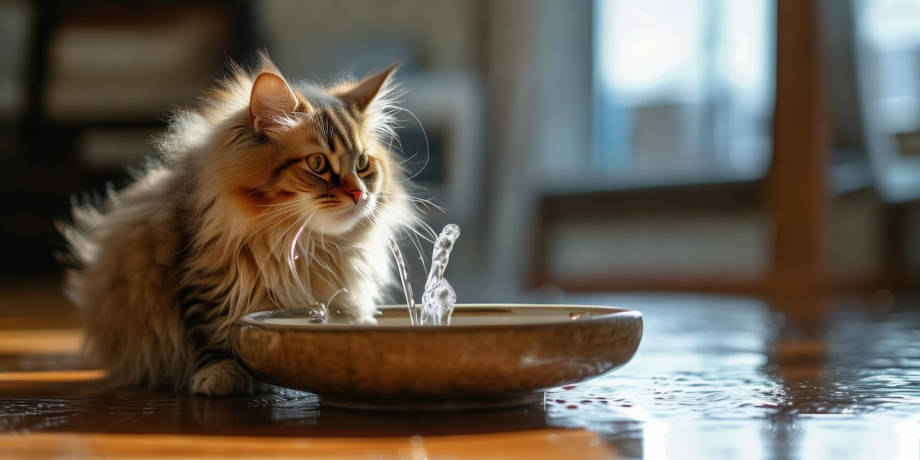
A ceramic bowl beats a cheap fountain, and a well-maintained fountain beats a neglected bowl — the device matters less than the system around it. That nuance out of the way, for most indoor cats the fountain is the better buy: moving water taps directly into a cat’s instinct that still water is stale, and intake reliably rises when one enters the house. A bowl wins only under three conditions: your cat already drinks well, your cat is sound-sensitive or fountain-averse, or you cannot commit to the weekly cleaning a fountain demands. This guide lays out real costs, hygiene workloads, and which type of cat thrives on which — so the decision takes five minutes instead of a regrettable $40 purchase.
Why the Choice Matters More for Cats Than Dogs
Cats carry a famously weak thirst drive — roughly two-thirds of the daily water target of a comparable dog relative to diet moisture — a trait inherited from desert ancestors that extracted moisture from prey instead of seeking water. The practical consequence: cats drink only when the water feels worth drinking. Temperature, freshness, movement, and bowl material all shift intake measurably, which is why hydration-related conditions (urinary crystals, kidney strain) are among the most common feline vet issues while being rare in dogs that happily lap from a muddy puddle. When the average cat’s fluid intake can be nudged by presentation alone, the bowl-versus-fountain question is not gadget talk — it is preventive medicine.
Side-by-Side: Fountain vs Bowl
| Factor | Water Fountain | Regular Bowl |
|---|---|---|
| Upfront cost | $25–60 | $5–15 |
| Appeal to instincts | High — moving water reads as fresh | Low — still water reads as stale |
| Daily workload | Top up, quick rinse | Full wash + refill |
| Weekly workload | Full teardown, pump scrub, filter swap | None beyond daily washes |
| Ongoing costs | Filters ~$5–8 / 2 months | $0 |
| Power / noise | USB or plug; quiet pumps under 40 dB | None |
| Failure modes | Pump scale, filter skips, cord chewing | Biofilm if washed less than daily |
| Best for | Kibble-fed, busy, multi-cat homes | Strong drinkers, wet-food cats, minimalists |
The pattern in the table is consistent: the fountain trades money and maintenance for instinct appeal, and the bowl trades appeal for simplicity. Neither loses on hygiene if kept clean — the loser is always whichever one the owner cleans less.
The Real Cost Gap Over One Year
Sticker prices understate the gap only slightly, because fountains genuinely cost more to run. The honest first-year math:
- Bowl: $10 ceramic bowl + zero consumables = about $10/year, assuming you already own a dish brush.
- Fountain: $35 mid-range unit + three filter packs ($18) + roughly 15 minutes of weekly cleaning = about $53/year and 13 hours of your time.
So the fountain costs roughly five times more in year one. Whether that is worth it depends entirely on the next two sections — if intake rises, $43 extra per year is the cheapest urinary-prevention money in cat ownership; if your cat ignores the fountain (a real outcome for perhaps one cat in five), it is an expensive humidifier.
Hygiene: the Part Reviews Skip
A fountain’s filter does not excuse cleaning. Biofilm — the invisible bacterial slick — forms on any wet surface within 48 hours, pump included, and the filter catches debris, not bacteria. Fountain owners need one full teardown a week: pump housing off, impeller chamber scrubbed, filter replaced on schedule. Bowl owners need one hot-water wash a day, a 30-second task. The surprise for most buyers: the bowl is more hygienic per unit of effort, and the fountain is more hygienic only if its weekly teardown actually happens. Slip on that rhythm and a fountain turns into a bacterial soup with a filter inside — the failure mode behind most “my fountain made my cat sick” forum posts. If your cleaning style is sporadic, choose the bowl without guilt.
Which Cats Should Get a Fountain
The fountain case is strongest for five profiles:
- Kibble-fed cats — they carry the entire hydration burden on the bowl, so every ounce of extra intake matters most.
- Cats with a urinary or kidney history — where maximizing fluid intake is a standing medical instruction.
- Tap-drinkers — a cat that camps at the sink is literally voting for moving water; a fountain automates the preference.
- Multi-cat households — some cats refuse to share a bowl’s edge; a fountain offers multiple drinking spots and levels.
- Busy owners — 2-liter-plus capacity carries a single cat through a long workday without the bowl running dry.
For these cats, the ZYFeeder 2.2L Automatic Cat Water Fountain covers the whole checklist: 2.2-liter capacity, charcoal filtration, and a quiet pump — the three features that separate fountains cats use from fountains cats ignore. If you are still working on the basics of cat hydration first, start with How to Get Your Cat to Drink More Water — placement and bowl material are free wins that multiply whatever device you choose.
Which Cats Are Better Off With a Bowl
Three profiles should skip the fountain:
- Already-good drinkers — a cat that empties a ceramic bowl daily has no problem for the fountain to solve.
- Sound-sensitive or fountain-averse cats — some individuals distrust the motor hum or the stream itself and will drink less, not more.
- Wet-food cats — with 75–80% of the diet already moisture, the drinking gap a fountain fills barely exists.
For these, a good bowl setup is the honest answer: ceramic or glass, wide and shallow to protect the whiskers, washed daily, placed away from food and litter. A set like the 2-in-1 Large Pet Feeder & Water station covers food and water in one clean arrangement — though note the separate-stations rule above: many cats drink better when water sits apart from the food dish.
The 14-Day Test Before You Commit
Buying both and letting the cat decide beats any review, including this one. The protocol costs one week of attention:
- Days 1–7: run the current bowl setup as usual; note the water level each morning (mark the bowl with tape if helpful) to get a baseline.
- Days 8–14: add the fountain in a different location, keep the bowl in place, and compare daily consumption between the two.
- Read the result: a clear shift toward the fountain answers the question; roughly equal use means the bowl wins on simplicity; total fountain avoidance means return it — the cat has already voted.
Measure intake by disappearance, not by drinking sightings — cats drink mostly at night and dawn when nobody is watching.
Frequently Asked Questions
Is a cat water fountain worth the money?
For kibble-fed cats, cats with urinary history, and households away at work — yes; the roughly $50 first-year cost buys a reliable increase in daily intake. For wet-food cats and strong drinkers, a $10 ceramic bowl does the same job.
How often do I need to clean a cat water fountain?
Quick rinse and top-up daily, full teardown with pump scrub weekly, filter replacement every 2–4 weeks per the manufacturer’s schedule. Skipping teardowns lets biofilm build inside the pump — the top cause of fountain-related health complaints.
Can a water fountain get my cat to drink more?
Usually, yes — moving water exploits the instinct that running water is fresh, and intake typically rises within days of switching. Roughly one cat in five ignores fountains entirely, which is why the 14-day side-by-side test is worth the effort before you commit.
Are cheap water fountains safe?
Safe if — and only if — the materials are BPA-free plastic, ceramic, or stainless, and the cleaning schedule is kept. The full checklist for evaluating inexpensive units (motor quality, filter access, cord safety) is in Are Cheap Pet Water Fountains Safe?.