
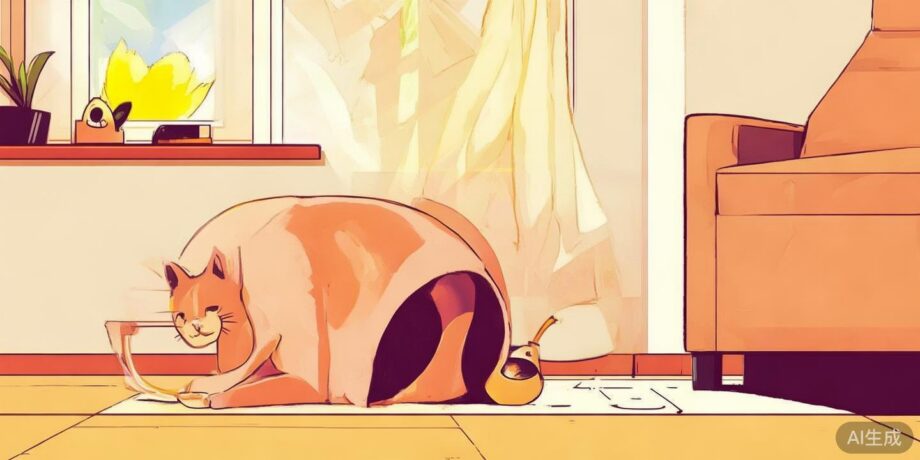
Why Bored Indoor Cats Act Out (and Why It Is Not “Bad Behavior”)
An indoor cat sleeps 12–16 hours a day, but the awake hours are built around a hunter’s schedule: short bursts of intense activity, then long rests. A cat left alone 8–10 hours with nothing to hunt — no prey movement, no problem to solve, no territory change — fills that void in ways you will notice: 3 a.m. yowling, couch scratching, over-grooming, or the classic “cat goes absolutely crazy for one specific toy” phenomenon that owners swap stories about in every forum thread on the topic. One discussion of exactly this — “what is that one toy your cat goes crazy for” — pulled 400+ replies, because the answer is always the same: the toys that move or dispense on their own.
The goal of an alone-time setup is not to entertain a cat the way a TV entertains a toddler. It is to rebuild the hunt: hide, stalk, pounce, and eat in small portions. Everything below maps to one of those four steps.
Before You Leave: Drain the Battery
The single highest-impact 15 minutes of your day happens before work. A real prey-play session — wand toy dragged away from the cat (prey never runs toward the predator), behind furniture, under a rug — followed by a small meal, taps directly into the hunt-then-sleep cycle. A cat that lands a successful “kill” at 8:30 a.m. will sleep through most of your shift the way a fed hunter does.
Skip laser-only sessions for this: the dot can never be caught, and uncompleted hunts leave some cats more restless, not less. Always end on a physical toy the cat can bite.
The 9 Ideas, From Free to Big Commitment
Idea 1: An Automatic Interactive Ball
Motion is the trigger, and an automatic interactive ball supplies it with zero human input. Modern versions roll unpredictably, shut off after a session, and some chirp to re-trigger interest. Set it up in a hallway or clear floor patch — the “hunting ground” matters more than the toy itself.
Realistic expectations: an automatic ball entertains in bursts of 5–15 minutes, not for hours. That is fine — a cat’s natural activity cycle is exactly that: short, intense, repeated. Place it so the ball can hide behind furniture mid-roll; the disappearance is what keeps the stalk instinct engaged.
Idea 2: Puzzle Feeders and Snack-Dispensing Toys
In the wild, eating is the entertainment: 9–12 small hunts a day. A puzzle feeder or snack-dispensing toy rebuilds that economics — the cat works for portions instead of vacuuming a bowl in 90 seconds. For alone-time use, pick treat puzzles that cannot be flipped in one move; weight or anti-slip bases matter more than cute shapes.
Start easy: load it loosely the first week so the payoff comes fast, then tighten. A puzzle that never pays out gets abandoned by Wednesday.
Idea 3: The Window Is Free Cable TV
A stable perch at a window with a view — birds at a feeder, street traffic, a squirrel route — is the cheapest enrichment that exists and the one behaviorists recommend most consistently. If the sill is too narrow, a suction hammock or a tall cat tree within a meter of the glass does the same job.
Take it further: a bird feeder suction-cupped outside the window converts free cable into pay-per-view. (Position it high enough that street cats cannot stalk the viewers — the drama cuts both ways.)
Idea 4: A Cat Tunnel for Ambush Energy
A collapsible tunnel hits two instincts at once: hiding and ambushing. Cats nap inside it, dart through it during zoomies, and use the openings as stalking blinds. Because it folds flat, you can rotate it between rooms so the territory “changes” without buying anything.
Rotation tip: move the tunnel, the ball, and the puzzle around weekly. A toy that relocates is functionally a new toy; a toy that lives in the same corner becomes furniture in about ten days.
Idea 5: Catnip and Silvervine Rotation
Not all cats respond to catnip — the response is genetic and only about two-thirds of cats carry it. Silvervine (matatabi) catches many catnip-immune cats, and a small rotation of both keeps each “hit” novel. Put a pinch inside the tunnel one week, rub it on the scratching post the next.
Limit sessions to 2–3 times a week; daily use dulls the response. And keep catnip toys out of reach between sessions — a permanently catnip-soaked toy stops being an event.
Idea 6: Vertical Territory — Shelves, Trees, and the Top of Something
Horizontal-only homes are boring homes. Vertical territory — a cat tree by the window, floating shelves forming a “cat walk,” even cleared wardrobe tops — multiplies usable space and gives the cat both exercise (climbing) and control (overlooking the room). In small apartments this is the highest-density enrichment available per square meter.
The sweet spot: one tall piece near the window, one lower hiding spot, and a clear path between them. That is a territory. Everything else is decoration.
Idea 7: Treat Trails and Hide-and-Seek for Mealtime
Split the morning ration: half in the bowl, half hidden in 4–5 spots along a “trail” the cat already patrols. Start obvious (treat in plain sight next to the sofa), then get sneakier over weeks. This is food enrichment at literal zero equipment cost, and it converts your absence into a foraging job.
Warning from experience: hide treats away from carpet edges and heating vents, or you will find fossilized treats during spring cleaning.
Idea 8: Background Sounds — What Works and What Doesn’t
Owners debate leaving TV or radio on; the honest answer is that constant noise does little for cats, but changing noise does. Brown noise or soft classical at low volume can buffer sudden outside sounds (deliveries, construction) that would otherwise jolt a cat out of a nap. Videos “for cats” (birds, fish) entertain some cats for 10–20 minutes — worth trying once on a weekend to see if yours is a viewer before relying on it.
Idea 9: An Adopted Companion — The Big Decision
For genuinely long or unpredictable schedules, a second cat is the most complete solution — and the biggest commitment. The internet’s favorite cautionary tale is the viral thread titled “getting a second cat ruined my relationship” (with its 1,000+ replies of both agreement and success stories): the difference between the two outcomes is almost always introduction process. Proper introductions take 2–4 weeks of separated spaces, scent swapping, and gradual visual contact. Two cats that bond keep each other exercised, groomed, and sane through any workday. Two cats that hate each other double the problem.
Rule of thumb: if your cat is young, playful, and shelter history shows it lived well with others, a matched companion is worth considering. If your cat is a senior or a confirmed solo artist, invest in Ideas 1–8 instead.
A Realistic Daily Schedule for a Working Cat Owner
| Time | Action | Why it works |
|---|---|---|
| 7:00 | 15-min prey play (wand/ball), then half the breakfast | Hunt → eat → sleep cycle starts the day |
| 7:20 | Set out puzzle feeder with a few kibbles, refresh window view | Foraging job replaces boredom grazing |
| 8:00 | Leave — automatic ball armed, tunnel repositioned, treats hidden on the trail | Territory changed; short activity bursts available on the cat’s schedule |
| 18:30 | Greeting + 10-min interactive play on arrival | Your return becomes the day’s second hunt |
| 19:00 | Dinner, then calm wind-down; clicker or trick training 5 min | Mental work substitutes for a third hunt |
| 22:30 | Final short play before your bedtime | Reduces the classic 3 a.m. wake-up call |
FAQ
Do cats get lonely when left alone all day?
Cats are socially flexible rather than pack animals; most adult cats tolerate 8–10 hours alone fine if the environment offers activity. Loneliness signals to watch for are behavioral: persistent yowling when you leave (record on your phone), over-grooming, litter box lapses, or destructive scratching that starts only during work hours.
Is it better to get a second cat if I work full time?
Only with a proper introduction (2–4 weeks, separate spaces first) and only if your cat’s age and history suggest sociability. A bad pairing creates more stress than boredom ever did. For most single workday situations, the nine ideas above cover the need at far lower risk.
How much play does an indoor cat actually need per day?
Two 10–15 minute interactive sessions (morning and evening) plus independent play options during the day. The morning session is the one that protects your workday — a cat that hunted at 7 a.m. sleeps through the boring middle of the day.
Are automatic cat toys safe to leave running unsupervised?
Choose ones with auto shut-off, no exposed strings or small detachable parts, and run the first week only while home to see how your cat uses them. Avoid string-based teasers on timers — strings unattended are an entanglement and swallowing risk regardless of brand.