
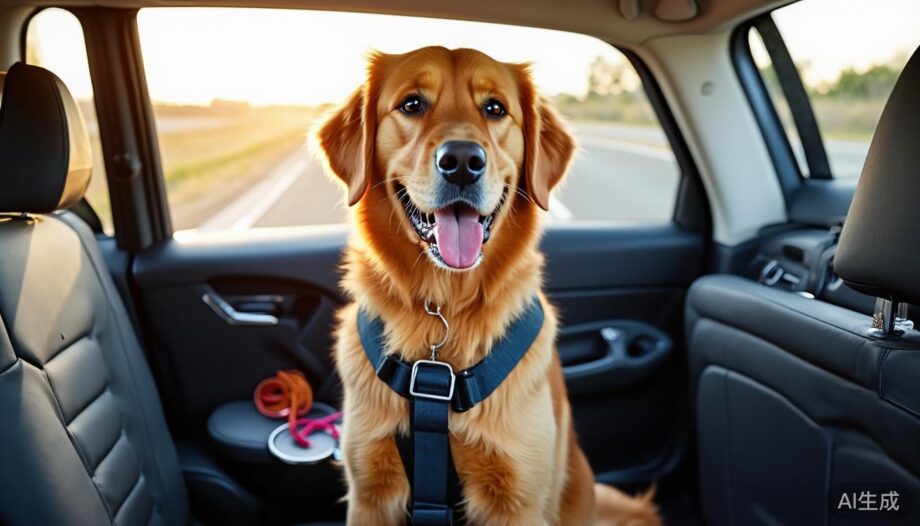
The short answer: a safe dog road trip comes down to three things — restrain your dog (harness or crate, never loose), stop every 2–3 hours, and never leave them alone in the car. Everything else on this checklist makes the trip easier, but those three rules are the ones that show up in every emergency-vet story. Most dogs take two or three short practice drives before they settle into a full-day trip, so start preparing the week before you leave, not the night before.
1. Restrain Your Dog Before You Start the Engine
An unrestrained 50 lb dog in a 30 mph crash becomes roughly 1,500 pounds of force — enough to injure the dog and everyone in the front seats. You have three options that actually work:
- A crash-tested harness + seat belt tether: the everyday choice. Clip the tether to the harness’s back handle, never to a collar. If you don’t own a car-rated harness yet, our dog harness buying guide covers fit and clip styles, and a pet car seat belt (under $10) connects it to the buckle receiver.
- A secured crate: the safest option for anxious dogs and chewers. Strapped in the back seat or cargo area with the door facing sideways, not into oncoming luggage. Measure first — our crate sizing guide explains the 6-inch clearance rule.
- A back-seat barrier: better than nothing, but it only stops the dog from reaching the front — it does not protect them in a crash.
Two things to avoid: letting your dog ride with their head out the window at speed (road debris causes real eye injuries), and letting them ride in the front seat where an airbag deploys.
2. Do Two or Three Practice Drives First
Dogs get carsick and anxious mostly from novelty. The fix is graduated exposure, and it works for the majority of dogs within a week or two:
- Day 1–2: sit in the parked car with the engine off, feed a meal or treats inside.
- Day 3–4: 10-minute drives to somewhere fun — a park, not the vet.
- Day 5–7: a 30–45 minute drive. Watch for heavy drooling, lip-licking, or whining: those are nausea signs, not stubbornness.
If your dog still gets sick after two weeks of practice, ask your vet about motion-sickness medication before a long trip — it’s a common prescription and it makes the drive dramatically better for everyone.
3. The Packing List (Print This Section)
- Food for the whole trip, in a sealed container. Abrupt food switches plus travel stress are the #1 cause of road-trip diarrhea. Bring more than you need in case you’re delayed.
- Water from home, or bottled water. Sensitive stomachs react to unfamiliar tap water. A folding silicone travel bowl (under $8) flattens into a door pocket and covers food and water on the go.
- Medications and a copy of vaccination records — required by many hotels and boarding facilities, and essential if there’s an emergency.
- A leash, collar with updated ID tag, and a recent photo on your phone in case your dog bolts in a strange place. For dogs with a habit of wandering, a GPS tracker is worth considering — we break down the costs honestly in our GPS tracker guide.
- Waste bags, paper towels, and an enzymatic cleaner. Accidents happen on schedule-disrupted trips.
- A familiar-smelling blanket or bed. It anchors your dog in hotel rooms and reduces pacing at night.
4. Protect the Car Before You Protect the Trip
Hair, mud, scratched leather, and quietly shredded upholstery are the four horsemen of dog travel. A hammock-style or bench car seat cover (roughly $35–40) takes 30 seconds to clip in, catches almost all of the mess, and hoses off at the end of the trip. It also blocks the floor gap so a nervous dog can’t fall into the footwell during a hard brake.
Lay a towel over the cover if your dog swims on the trip — wet dog plus nylon seat cover plus summer heat is a smell you will remember for the rest of the car’s life.
5. The 2–3 Hour Rule for Rest Stops
Stop every 2–3 hours for a 15-minute break: water, a short walk, a bathroom chance. Dogs hold it politely and then regret it. At every stop:
- Clip the leash on before opening the door — highway rest areas are the single most common place dogs are lost on trips.
- Offer water even if they don’t drink. Skip food until a longer stop; a full stomach plus motion equals nausea.
- Check paw pads on hot days — asphalt at 85°F can burn pads in under a minute. If you can’t hold the back of your hand on the pavement for 7 seconds, walk on grass only.
Feed the main meal at the end of the driving day, or 3–4 hours before departure if your dog is nausea-prone.
6. The One Rule With No Exceptions: Never Leave Them in the Parked Car
On an 85°F day, the inside of a parked car passes 100°F in about 10 minutes — even with the windows cracked. Cracked windows change the temperature curve by almost nothing. In cool weather, the risk flips: a dog alone in a car can set off passers-by to break your window, and in several US states that’s legal. If the trip includes a restaurant meal, use drive-throughs, pick places with outdoor seating, or take turns eating while someone walks the dog.
7. Hotels, Bookings, and the Nightly Routine
- Filter for “pets allowed” and read the fine print. Pet fees typically run $25–100 per night; some chains cap total fees per stay. Booking a pet-friendly room you confirmed by phone beats a canceled reservation at 9 p.m.
- Bring the crate if your dog is a chewer or pacer in new rooms — a hotel damage charge costs more than any gear on this list. Anxious dogs usually settle faster crated with a covered side.
- Keep the evening routine identical: same food time, same walk length, same bed placement relative to yours. Dogs handle new places well when the schedule stays boring.
If you’re traveling for a move rather than a vacation, our moving-with-a-dog timeline covers packing-day chaos and first-night settling in detail.
FAQ
How long can a dog ride in a car in one day?
Most adult dogs handle 6–8 hours of total driving per day comfortably if you stop every 2–3 hours. Puppies and senior dogs do better with 4 hours or less. Split long trips across days rather than pushing a 12-hour single day.
Should I feed my dog before a road trip?
Feed a light meal 3–4 hours before departure, then nothing but water and small treats while driving. Feed the full meal after the day’s driving ends. A full stomach is the top trigger for carsickness.
My dog cries the entire drive. What actually works?
Rule out nausea first (drooling, lip-licking, yawning) — crying dogs are often sick dogs, and motion-sickness medication from your vet fixes it. If it’s pure anxiety, short daily practice drives plus a long exercise session before departure calm most dogs within two weeks. A stuffed chew toy for the first 30 minutes also redirects many dogs.
Are dog seat belts actually safe, or just legally required?
A properly fitted, crash-rated harness and tether genuinely reduces injury risk for medium and large dogs — cheap elastic tethers do not. Look for harnesses labeled with crash-test certification, attach the tether to the harness rather than a collar, and keep the tether short so the dog can’t hit the seatback in a stop.
Can I let my small dog ride on my lap?
No. In a sudden stop the dog becomes an airbag between you and the wheel, and an airbag deployment is lethal to a lap-sized dog. Small dogs belong in a secured carrier or a crash-rated harness on the rear seat.