
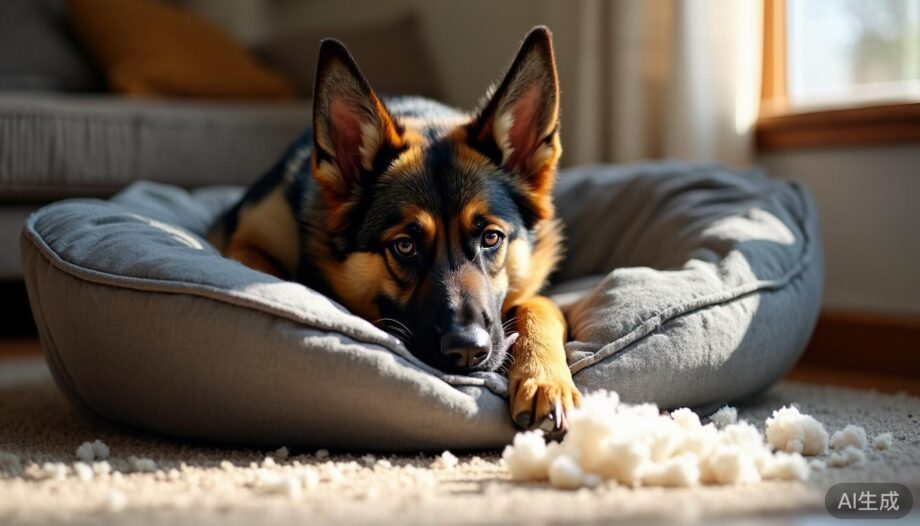
The short answer: no dog bed is truly chew-proof, and the material decides whether it lasts a year or a single afternoon. For a committed chewer, the best bed is a tight-weave ballistic-nylon or canvas cover with concealed seams ($50–80, bought once), while fluffy sherpa and plush beds — the kind most dogs sleep on — are the fastest to die. Reddit’s German Shepherd owners report plush beds “shredded in a day.” And the cheapest fix most owners miss: a $4–7 indestructible chew toy protects a $70 bed better than any bed upgrade.
This guide ranks the seven most common dog bed materials from worst to best for chewers, explains why dogs destroy bedding in the first place, and shows the real-cost math behind “buy cheap, replace often.”
Why Dogs Destroy Their Beds in the First Place
Shredding is normal dog behavior with an underlying trigger — the bed is just the victim. The five most common causes:
- Teething (3–7 months): gums hurt, soft fabric is the nearest relief.
- Boredom: an under-exercised dog invents work; unstuffing a bed is a great job.
- Anxiety, especially when alone: destructive nesting is a classic separation-anxiety signal.
- Nesting instinct: some dogs dig and fluff genuinely, without anxiety — and tear fabric that resists.
- The attention loop: if shredding always produces a dramatic human reaction, the behavior gets reinforced.
Before you blame the bed, watch when the destruction happens. Alone-time shredding points to anxiety or boredom; supervised shredding usually points to attention or teething. The fix differs — see our full breakdown in How to Stop a Dog Destroying Beds and Blankets.
How We Ranked These Materials
Three factors decide whether a bed survives a determined chewer:
- Fabric structure: tight weave (ballistic nylon) resists picking; loose pile (sherpa, fleece) invites it.
- Seam construction: exposed, double-stitched seams are the first failure point; concealed or taped seams add weeks of life.
- Fill type: loose polyester fill is a confetti reward once the cover fails — it teaches the dog to keep going. Solid foam is a chewing target too, and dangerous if swallowed.
No material scores perfectly. The ranking below is about how long each one buys you and what happens when it fails.
The Ranking: 7 Dog Bed Materials, Worst to Best
1. Sherpa and plush beds — a single afternoon for a serious chewer
The fluffy stuff feels luxurious and cats love it, but loose pile fabric plus pillowy fill is the perfect shredding texture. For gentle dogs and cats it lasts years; for a German Shepherd or a bored terrier, owners report a day or less. If your dog has never destroyed anything, a plush sleeping bed in the $13–15 range is perfectly reasonable — just don’t gamble with it if there’s a chew history.
2. Fleece blankets and low-loft mats — cheap, shred-able, but low stakes
A fleece blanket is technically shreddable, but there’s no tempting fill inside, and at $5–10 replacing one doesn’t hurt. Some owners deliberately use fleece as a “controlled sacrifice” during training. Not a real bed solution, but a useful transitional one.
3. Quilted polyester-fiber beds — the budget default, seams first to go
The classic $15–25 quilted bed fails at the zipper or the outer seam, then dumps loose fill everywhere. The “confetti reward” trains the dog that beds are fun to open. Fine for mild chewers; a money pit for heavy ones.
4. Memory-foam orthopedic beds — great bed, worst chew target
Memory foam is fantastic for senior joints — see Best Orthopedic Dog Beds for Senior Dogs: Foam Density Explained — but exposed foam is the most dangerous thing on this list if ingested, and expensive to replace. Only pair memory foam with a tough outer cover, and only for dogs past their destructive phase.
5. Cotton canvas and denim covers — the quiet middle
Tight plain weaves resist picking better than anything fluffy. Denim and canvas covers ($30–50 typical) survive moderate chewers for months and show damage slowly instead of failing all at once. Underrated option if ballistic nylon is over budget.
6. Vinyl and PVC-coated crate pads — what kennels actually use
Boarding kennels don’t buy plush. Vinyl-coated pads have no fabric pile to grab, wipe clean, and cost $20–40. Downsides: less cozy, can get clammy, and a determined chewer can still puncture the edge — but there’s no fill explosion when it happens.
7. Ballistic nylon (1680D) with concealed seams — the realistic best
Luggage-grade ballistic nylon with taped or hidden seams is the toughest widely available bed material ($50–80). “Indestructible” marketing oversells it — nothing is — but it survives most power chewers for a year or more and fails as a small hole rather than a snowstorm of fill.
The Cheaper Win Most Owners Miss: Manage the Dog, Not Just the Bed
Upgrading the bed without addressing the chewing just buys a more expensive victim. The highest-leverage $5 you can spend is a redirect target:
- Keep an indestructible chew toy (most under $7) on the dog’s bed, so the chewing instinct has a legal outlet inches from the illegal one.
- Trade, don’t scold: calmly swap stolen fabric for the toy, reward the swap. Punishment after the fact does nothing — the dog can’t connect it.
- Don’t grant unsupervised bed access until two full weeks without an incident; a crate or bare floor with a low-cost anti-slip mat is the probation setup.
- Add physical exercise before alone-time: a tired dog nests, a rested dog excavates.
For picking the right redirect toy (and spotting the ones that die in minutes), see 7 Signs a Toy Won’t Survive Your Chewer.
Real Cost Comparison: Replace Cheap vs. Buy Once
| Strategy | Upfront | Typical lifespan with a heavy chewer | Year-1 cost |
|---|---|---|---|
| $13–15 plush bed, replaced | $13–15 | 1–8 weeks | $80–200+ |
| $15–25 quilted bed, replaced | $15–25 | 1–3 months | $60–180 |
| Vinyl crate pad | $20–40 | 6–12 months | $40–80 |
| Ballistic nylon bed + $5 chew toy | $55–85 | 12+ months | $55–85 |
The pattern: with a true power chewer, the cheapest option is usually the most expensive over a year — and every shredded bed with loose fill rehearses the behavior. Buying once plus a redirect toy is both cheaper and calmer.
What to Do the Week Your Dog Shreds a Bed
- Check for swallowed filling first. Polyfill can cause intestinal blockages. If your dog vomits, refuses food, or seems lethargic after a shredding session, call the vet before anything else.
- Remove the body completely. A half-dead bed with a hole is an open puzzle. Don’t sew it and hope.
- Downgrade, don’t re-buy. Move to a fleece blanket or bare crate floor for two weeks.
- Introduce the chew toy on the sleeping spot and reward every chew on it.
- Reintroduce a real bed gradually — supervised naps first, then unsupervised once a fortnight passes clean.
FAQ
Are any dog beds truly indestructible?
No. “Indestructible” and “chew-proof” are marketing terms. Ballistic nylon with concealed seams is the toughest realistic option, but a determined dog can eventually get through anything. The honest goal is months-to-years of survival, plus redirecting the chewing itself.
What do boarding kennels and shelters use for destructive dogs?
Mostly vinyl or PVC-coated cot-style beds and rubberized mats: no pile to grab, no fill to unstuff, easy to disinfect. If a bed style survives kennel use, it’s a strong signal for your home crate too.
Is memory foam dangerous for chewers?
It can be. Ingested foam is a documented blockage risk and usually needs imaging to rule out. If your dog still chews, stick to no-fill options and save the orthopedic bed — which seniors genuinely benefit from — for after the destructive phase.
My dog only destroys the bed when we’re out. Is that separation anxiety?
Quite possibly. Alone-time-only destruction clustered near the door or window is a classic separation-anxiety pattern; shredding done calmly in front of you is usually boredom or nesting. Treatment is counterconditioning, not tougher bedding — and a vet or trainer check is worth it if the dog also vocalizes or drools when left.
Should I just give a destructive dog a cheap bed to destroy?
No. Beyond the cost treadmill, every ingestion of fill is a medical gamble, and each successful shred reinforces the habit. Redirect to a chew toy instead — it’s the same instinct with none of the risk.