
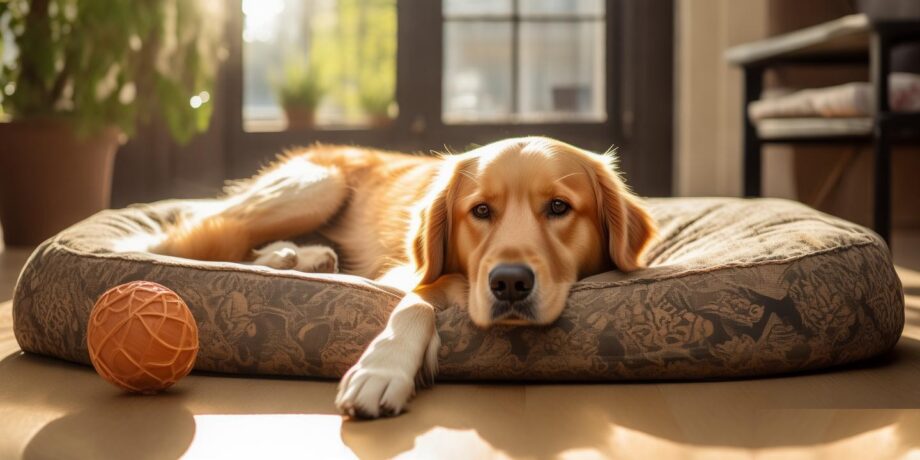
The short version: a dog alone for eight to ten hours doesn’t need eight hours of entertainment. She needs 30 to 45 minutes of real exercise before you walk out the door, a breakfast that takes effort to eat, and a setup that gives her something to do between naps. Owners who combine those three things usually report the destroyed-cushion era ends within a couple of weeks — and the nine ideas below, ranked roughly by cost, are how working dog parents on the biggest puppy forums actually pull it off.
What Your Dog Actually Does While You’re Gone
Healthy adult dogs sleep 12 to 14 hours a day, and most of that lands conveniently inside your workday. When owners in a 222-upvote puppy-forum thread with 290+ replies described what their cameras actually capture, the most common answer was some version of “she sleeps until about 2 p.m., then stares at the door.” The genuine risk windows are the first 30 to 60 minutes after you leave (peak arousal — this is where most destruction happens) and the final hour before you return (anticipation whining and pacing).
Boredom has a signature: scattered, casual damage — a shredded tissue box, couch cushions opened “to see what’s inside,” barking at every dog that passes the window. If the damage clusters around doors and exits instead, that’s a different problem entirely, covered below under separation anxiety.
The Morning Routine That Does Most of the Work
Nothing you buy replaces the first hour of your day. The combo that working owners keep converging on in “solo dog owners who work long shifts” threads:
- A 20–30 minute walk that allows real sniffing. Sniffing is mentally expensive for a dog — a slow “sniffari” tires many dogs more than a fast sidewalk march of twice the length.
- 5–10 minutes of fetch or tug on top for high-energy breeds.
- Feed after the walk, not before — and make breakfast slow (ideas 1 and 2 below do this for free).
- A boring exit. No dramatic goodbyes; long farewells spike arousal exactly at the worst window.
9 Ways to Keep a Dog Entertained While You Work
1. Turn Breakfast Into a Snuffle Mat Hunt
Scatter her morning kibble across a snuffle mat ($20.33) instead of pouring it into a bowl. Ten to fifteen minutes of nose work is the canine equivalent of a crossword puzzle, and it converts the meal you were feeding anyway into the day’s first boredom killer.
2. Freeze the Second Half of Breakfast
Stuff a tough rubber toy with wet food or xylitol-free peanut butter and freeze it overnight. A frozen stuffed toy keeps most dogs working for 20 to 40 minutes, and the licking itself has a settling effect — it’s the reason lick mats are a shelter staple. Cost: essentially nothing, since it uses food she was getting anyway.
3. Add a Treat-Dispensing Puzzle Toy
An adjustable treat dispenser ($13.48) pays out kibble a piece at a time as she rolls it around the room. Set it harder as she gets faster, and budget the calories out of her daily ration so “entertainment” doesn’t quietly become a fourth meal.
4. Leave Background Audio On — for the Right Reason
Your dog is not following the plot. What low TV or radio actually does is mask the triggers — delivery trucks, the neighbor’s dog, footsteps in the hallway — that start barking spirals in an otherwise silent home. That 222-upvote thread of camera owners is close to a consensus: dogs in very quiet houses bark more at isolated sounds, and a steady low audio bed visibly settles them. Sound-sensitive puppies often do best with brown noise rather than music or talk radio.
5. Put a Camera Where She Actually Sleeps
A 2K pet camera with two-way audio ($56.28) answers the question that ruins workdays: “what is she doing right now?” Two honest notes from long-term users. First, place it on her actual sleeping spot, not the front door. Second, resist narrating through the speaker — most dogs ignore it or get more unsettled hearing a disembodied owner. The motion alerts are the real feature: they tell you whether the risky first hour was actually quiet.
6. Rotate Toys Instead of Leaving Everything Out
A toy that lives on the floor 24/7 stops being a toy by Wednesday. Keep three or four out and swap the lineup every few days — the sudden return of an old toy reliably resets interest for free. Rotate in durable stuffers only; anything that shreds in an afternoon is a supervised-only item, and the early warning signs are in our dog toy durability guide.
7. Automate a Midday Meal Drop
The longest stretch of a nine-hour day is the middle. A smart automatic feeder from our smart pet tech range ($126.60 for the model we stock) that drops a small kibble portion at 1 p.m. does two jobs at once: it splits the day in half, and the post-meal drowsiness fills the early afternoon. A simple timed bowl does the same for less money if your dog doesn’t inhale food.
8. Build a Base Camp
One dog-proofed room beats run of the whole house: her bed, water, one long-lasting chew, and the camera aimed at it. If she’s a window-barker, close the blinds on the street side; if she’s calm about the view, a window with a sightline is free television. Puppies get an exercise pen instead of a room — the FAQ below covers how long each age can hold.
9. Buy Real Breaks on Your Hardest Days
The 47-upvote “solo dog owners who work long shifts” thread (70 replies) converges on a single answer: one midday break transforms a nine-hour day. A dog walker twice a week runs about $15–25 per walk in most US cities; even a neighbor’s lunchtime visit counts. For high-energy breeds this isn’t optional spending — it’s cheaper than the damage budget.
What Not to Do
Three traps that make things worse. Punishing after the fact — a dog cannot connect your evening anger to the morning’s cushion, and the added anxiety makes destruction more likely, not less. Bark collars as a first resort — find the trigger first, because it’s usually the window. Getting a second dog as entertainment — it works maybe one time in three and can double the problem; if you’re seriously considering it, read the second-dog checklist first.
Separation Anxiety or Just Boredom?
Rule of thumb: boredom damage is scattered and casual; separation-anxiety damage concentrates on exits — clawed doorframes, housetraining accidents within the first hour, drool on the crate bars, neighbors reporting howling all day. True separation anxiety is a training-and-veterinary project, not a toy problem, and it responds badly to improvised fixes. What you can buy that genuinely helps some dogs settle is a spot of their own — calming beds are worth reading up on before you spend on gadgets.
What It Costs to Set Up
| Piece | Real cost | Who actually needs it |
|---|---|---|
| Snuffle mat | $20.33 | Every dog |
| Frozen stuffed toy | ~$0 (uses her regular food) | Every dog |
| Treat dispenser | $13.48 | Food-motivated dogs |
| 2K pet camera | $56.28 | Puppies, new adoptions, anxious dogs |
| Smart feeder | $126.60 | 10-hour shifts, portion control |
| Dog walker 2×/week | $120–200/month ongoing | High-energy breeds |
The core one-time kit — mat, dispenser, camera — totals about $90, which is less than many owners spend replacing a single chewed couch cushion. Add the walker budget only if you have a working breed in an apartment.
FAQ: Keeping Dogs Entertained During the Workday
Is it OK to leave a dog alone for 8 hours?
For a healthy adult dog with the setup above, yes — most sleep through the bulk of it. Eight hours with no break is hard on puppies and on dogs with anxiety or bladder issues; those cases need a midday walker, a sitter, or doggy daycare.
How long can a puppy stay alone?
A common vet rule of thumb is one hour per month of age, plus one, capped around six hours — so a three-month-old puppy needs a break by the four-hour mark. Use an exercise pen, not open rooms.
Should I leave the TV on for my dog?
Yes, at low volume — but for masking street noise, not as entertainment. Steady background audio reduces trigger-barking in most home-camera reports; anxious or sound-sensitive pups often settle better with brown noise than with music or talk radio.
Are pet cameras worth it for workdays?
For most working owners, yes. A basic 2K model with motion alerts and two-way audio costs around $56 and replaces weeks of guessing — you learn within days which hours are actually risky, and most owners discover their dog sleeps far more than they feared.
Do dogs get bored of the same toys?
Quickly — often within days. Rotate three or four toys in and out weekly and old toys come back feeling new, for free.
The Bottom Line
The formula that works is boring and cheap: a tired body (the morning walk), a working nose (a sniffed and frozen breakfast), a safe base camp, background audio, and a real break on the longest days. That’s roughly $90 one-time for the core kit. And if there’s a cat spending the same workday alone in your home, the playbook has a feline version — our guide to keeping a cat entertained while at work covers it.