
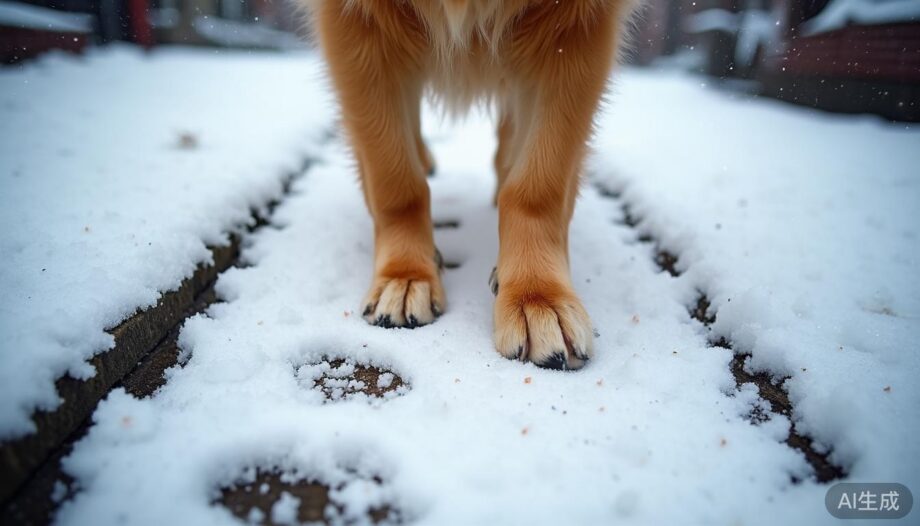
Short answer: for most dogs, paw balm is the default — it’s cheaper ($6–12 vs $6–26 for boots), works on 90% of winter walks, and takes 15 seconds to apply. Boots win in three specific situations: heavily salted city sidewalks, deep-snow or ice-ball hikes, and dogs with existing cracks, cuts, or ice injuries. Plenty of owners in cold climates end up using both — balm daily, boots on the worst days. Here’s the honest cost math and the decision framework.
What Each One Actually Does (and Doesn’t Do)
Paw balm (wax or cream, usually shea-beeswax-coconut based) does two jobs: it moisturizes pads so they don’t dry, crack, and split in cold, dry air, and it forms a thin barrier between the pad and road salt or ice-melt chemicals. What it does not do: provide grip on ice, stop ice balls from forming between toes on long snow romps, or protect a pad that’s already cut.
Dog boots provide a physical wall between the pad and everything — salt, ice, sharp snow crust, hot asphalt residue, glass hidden in slush. Good ones with rubber soles add real traction on ice. What they do not do: moisturize anything (they can actually trap moisture and soften pads if worn too long), and they fail completely if your dog refuses to walk in them — which is the single most common outcome for first-time boot buyers.
Real Cost Comparison: One Winter, Line by Line
| Cost item | Paw Balm | Dog Boots |
|---|---|---|
| Upfront cost | $6–12 per tin | $6–26 per set of 4 |
| How long it lasts | One full winter season (30–60g tin, 3–4 applications/week) | 1–2 seasons — Velcro and sole wear out; lost singles ruin the set |
| Hidden cost | None | Wrong size = reorder; chewed strap = reorder; many dogs destroy boot #1 in week one |
| Time cost | 15 seconds before the walk, wipe after | 1–2 weeks of indoor training; 2 minutes of wrestling before every walk |
| Realistic first-year total | $6–24 (1–2 tins) | $13–52 (1–2 sets, plus the set your dog rejects) |
For reference, our own prices sit at the low end of both ranges: Dog Paw Balm at $7.33 (reg. $11.13), waterproof dog shoes from $6.43, and anti-slip paw protector boots at $12.98. The pattern holds everywhere: a season of balm costs about the same as one boot set, and boots carry the higher “retry risk.”
When Boots Are Clearly Better
- Salted city sidewalks. Rock salt and calcium chloride ice melts burn pads and are toxic when licked off. Balm slows absorption; boots stop it completely. If your route is salt-heavy pavement, boots (or a very consistent balm + paw-wipe routine) matter.
- Deep snow and ice balls. Dogs with furry feet grow ice balls between their toes that hurt and make them chew their paws mid-walk. Balm reduces ice adhesion a little; boots eliminate it.
- Existing cracks or cuts. Putting balm on an open crack is fine, but salt-in-wound pain is brutal. Boots protect healing pads — though check with your vet if the crack is deep or bleeding.
- Senior dogs on ice. Older dogs with weaker hips and arthritis slip on frozen pavement. A boot with a genuine rubber sole adds traction balm can’t.
- Long winter hikes (1+ hours) where snow crust acts like broken glass on pads.
When Balm Is Clearly Better
- Your dog is a normal neighborhood walker (20–45 minutes, mixed pavement and park). Balm covers this entirely.
- Your dog hates boots. Most dogs need 1–2 weeks of positive-reinforcement training to accept boots. If your dog is a senior, anxious, or you both lack the patience — don’t force it. Balm has a 100% acceptance rate.
- Dry, cracked pads are the actual problem (common in winter’s low humidity). Boots do nothing here; balm is literally the treatment.
- Budget matters. One $7 tin versus a $13+ set you might have to replace twice.
The Honest Verdict by Dog Type
- City dog, short walks, mild winters: Balm only. Save the boot money.
- City dog, salted streets: Balm daily + budget boots for the worst ice-storm days. Wipe paws with a warm damp cloth after every walk either way.
- Snow-country dog / hiking dog: Both. Balm maintains pad health; boots handle trail days.
- Senior dog: Balm for pad care + grippy boots for ice, since a slip can mean an expensive injury (think four-figure surgery) — the boots pay for themselves with one prevented fall.
- Boot-refusing dog: Balm plus a paw-cleaning routine, and trim the fur between toes to cut ice balls. Skip the wrestling match.
One more thing boots can’t replace: the post-walk wipe. Whether you use balm or boots, a 15-second warm-water wipe removes salt residue before your dog licks it — that single habit prevents most winter paw problems. We cover the full routine in our winter paw care guide.
Buying Boots Without Wasting Money: 3 Rules
- Measure before you order. Stand your dog on paper, mark front and back of a front paw, measure in inches. Most sizing charts are width-based; a boot that’s too big twists, too small cuts circulation. Back paws are often slightly smaller — some dogs need two sizes.
- Velcro strap + rubber sole, always. Sock-style boots without a real sole slide around on ice and last weeks, not seasons.
- Introduce them indoors first. One boot on → treat → praise → walk around the living room. Add boots one at a time across several days. A dog that panics will kick a boot off in the first 50 meters and you’ll believe “boots don’t work” when the real issue was training.
FAQ
Can I use paw balm and boots together?
Yes, and in harsh climates it’s the best combo — a thin balm layer keeps pads conditioned under the boots and protects the toes where the boot edge sits. Just don’t apply a thick layer, which can make boots slide. Take boots off when you get home so trapped moisture doesn’t soften the pads.
How often should I apply paw balm in winter?
Before each walk on salted or very cold surfaces (about 15 seconds per paw), and once more at bedtime on dry, cracked pads. A 30–60g tin lasts most owners a full season at that rate. If pads are already cracked, apply nightly until the cracks close — usually 1–2 weeks.
Is paw balm safe if my dog licks it?
Reputable balms use food-grade ingredients (shea butter, beeswax, coconut oil) precisely because dogs will lick them — small ingestions are harmless. Avoid human products with added fragrance, menthol, or camphor, and anything not labeled pet-safe. When in doubt, check the ingredient list against your vet’s “avoid” list.
Why do my dog’s boots keep falling off?
Almost always sizing (too big) or strap placement (too loose / not wrapped above the dewclaw or carpal pad). Re-measure paw width at the widest point, size down if you’re between sizes, and cinch the strap snug enough that you can slide one finger under it — no more. If your dog high-steps or refuses to move, that’s normal for the first few sessions, not a defect.
Do dogs really need paw protection at all in winter?
Wild-living dogs’ pads toughen through constant outdoor life, but pet dogs walking on de-iced pavement face concentrated salt and chemical ice melts their pads never adapted to. Vets consistently report more pad cracks, chemical burns, and ice-ball injuries in winter. Protection isn’t mandatory for every dog on every walk — but if your route has visible salt, or your dog limps, licks paws, or chews at ice balls, that’s the signal it’s time.