
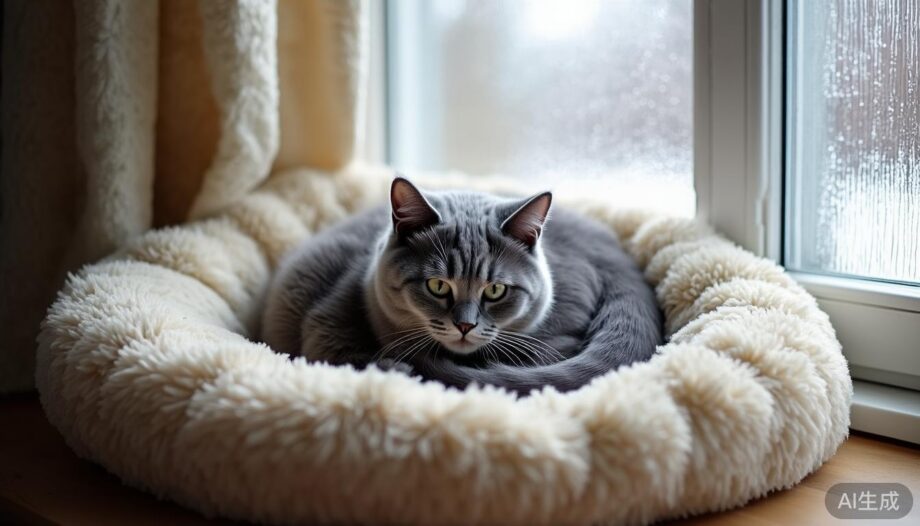
Cats do get cold, and sooner than most owners expect. A healthy adult indoor cat starts feeling genuine discomfort once room and outdoor temperatures drop below about 45°F (7°C), and prolonged exposure below freezing (32°F / 0°C) puts her at real risk of hypothermia. Kittens under eight weeks, seniors over ten, thin-coated and hairless breeds, and cats with chronic illness feel the cold far earlier. The fix is rarely a sweater — it is a draft-free sleeping spot, a warmer bed, and a few cheap adjustments to the rooms your cat actually uses.
How Cold Is Too Cold for a Cat?
Veterinary guidance draws the line in three zones, and it is worth knowing all three:
- Above 45°F (7°C): a healthy, dry, full-coated adult cat is fine. Uncomfortable maybe, but fine.
- Below 45°F (7°C): sustained exposure gets risky, especially for kittens, seniors, and thin cats. This is the threshold where a mostly-indoor cat should not be spending hours on a balcony or in an unheated garage.
- Below 32°F (0°C): danger zone for any cat. Wet coat, wind, and damp push the effective temperature down further. Frostbite hits the ears, tail, and paw pads first; hypothermia follows.
One nuance owners miss: humidity and drafts matter as much as the number on the thermostat. A 60°F room with a cold draft along the floor is harder on a cat than a dry 55°F room with none — and your cat sleeps at floor level, where the coldest air in the house sits.
Why Cats Feel the Cold Differently Than You Do
A cat’s normal body temperature runs 100.5–102.5°F (38.1–39.2°C) — a full degree and a half above yours. And research on feline physiology puts a cat’s thermoneutral zone (the temperature range where the body needs to burn no extra energy to stay warm) at roughly 86–100°F (30–38°C), far higher than a human’s. In other words, the living-room temperature you find comfortable is, from your cat’s point of view, mildly cool. That is why cats seek out sunbeams, radiator tops, and laptop keyboards — they are not being dramatic; they are topping up.
The trade-off is that cats are small. A 9 lb (4 kg) body loses heat much faster than a 150 lb human one, and a cat’s thin ears, tail, and paw pads are natural radiators. A cat who is damp — rain, a wet bed, a spill — can slide into trouble in temperatures a dry cat would shrug off.
The 5 Cats Who Feel Cold First
1. Kittens under eight weeks
Kittens cannot regulate body temperature properly until roughly eight weeks of age. A chilled kitten becomes a hypoglycemic kitten fast, and that is an emergency. Keep their nest area around 75–80°F (24–27°C) in the first weeks.
2. Seniors over ten
Older cats move less, burn less, and often carry less insulation. Cold also stiffens arthritic joints — many senior cats look “suddenly old” every November and bounce back in April. Warm, low-entry bedding is one of the highest-value changes you can make for an aging cat; our guide to making your home senior-cat friendly covers the rest.
3. Thin-coated and hairless breeds
A Sphynx has essentially no insulation and needs a warm room year-round. Siamese, Orientals, and Rex coats are single-layered and thin. These cats should live indoors in winter, full stop.
4. Cats with chronic illness
Kidney disease, hyperthyroidism, and heart conditions all change how a cat manages energy and circulation. A sick cat in a cold room gets sicker faster.
5. Wet or outdoor-exposed cats
A soaked coat loses insulating power almost entirely. If your cat got caught in the rain, towel her dry and keep her in a warm room — do not let her “air dry” in a cold hallway.
7 Ways to Keep Your Cat Warm This Winter
1. Move her bed off the floor and away from drafts
The single cheapest fix. Cold air pools at floor level, and window frames and door gaps push invisible drafts across it. Move the bed to an interior wall, onto a sofa or a low shelf, and lie down yourself to check for airflow — if you feel a draft, she lives in one.
2. Upgrade to a plush, enclosed, or self-warming bed
A flat cotton pad on tile does nothing. A deep plush pad — like our soft plush cat bed pad (under $20) — lets her curl into a bowl of trapped warm air. For serious winter comfort, an enclosed deep-sleep style bed such as the winter deep-sleep pod (under $30) holds her own body heat around her, which is exactly how cats like it.
3. Add a fleece layer she can burrow into
Cats will not wear a blanket you drape on them, but they will absolutely lie on one. A fleece mat over her regular bed adds a warm-air layer, and it is machine-washable when it gets matted. Budget pick: the flannel sleeping mat (under $10), which works for cats and small dogs alike. Put it in her favorite corner, in a cardboard box, or inside her covered bed.
4. Make one “warm room” instead of heating the whole home
If you are watching energy costs, pick the room your cat spends the most time in, seal its drafts (door snake, window film), and keep that one at 65–70°F (18–21°C). Cats self-regulate brilliantly when they can move between a warm room and a cooler one — what they cannot handle is an evenly cold home with no warm anchor.
5. Warm her water, and move it away from exterior walls
Cats drink less when the water is ice-cold, and winter dehydration quietly contributes to kidney strain in a species that already drinks too little. Move bowls away from windows and exterior walls, and refresh with cool-but-not-cold water. If your cat ignores still water entirely, a fountain helps — see our guide to getting your cat to drink more water.
6. Use heated products with cat-specific caution
A low-wattage pet heating pad or microwavable warmer is fine under supervision, with a chew-proof cord and a blanket layer between the heat and your cat — never a human heating pad on high, which can burn skin before a cat relocates. Kneading cats puncture thin covers, so inspect for exposed wiring weekly. Any space heater needs tip-over protection and three feet of clearance from bedding and climbing routes.
7. Add a little food and a lot of play
Outdoor and indoor-outdoor cats burn noticeably more calories staying warm in winter — bump portions modestly and watch body condition rather than blindly scooping more. For indoor cats, two short play sessions a day boost circulation and keep joints from stiffening in the cold months. It also fights the winter boredom that drives 3 a.m. mischief.
Signs Your Cat Is Too Cold — and When It Is an Emergency
Cats hide discomfort, so read the behavior, not the thermometer alone:
- Curling into a tight, nose-to-tail ball with paws tucked under — the classic heat-conservation posture.
- Cold ears, cold paw pads, or a cold tail base that does not warm within minutes of coming inside.
- Seeking heat obsessively — radiators, laptops, the tops of refrigerators, your lap every single evening.
- Reluctance to leave one warm spot, stiffness, or hiding more than usual.
- Shivering, lethargy, or slow breathing — these are late signs. A cat with these symptoms, or a rectal temperature under 98°F (36.7°C), is hypothermic: wrap her in a warm (not hot) blanket, offer a gradual heat source, and call your vet immediately.
One related winter flag: cold weather also suppresses appetite in some cats. If your cat is eating noticeably less for more than a day, do not write it off as winter moodiness — the reasons and red flags are in why is my cat not eating.
Winter Hazards Beyond the Temperature
Three non-temperature risks spike in cold months and are worth a hallway check:
- Heaters and fireplaces: use a fire screen; tails and whiskers get singed by curious inspections. Keep beds and blankets three feet from any heater.
- Antifreeze: deadly in teaspoon amounts and sweet-tasting. Wipe up garage drips immediately and wash paws after any garage or driveway exposure.
- The cold car: cats crawl into engine bays and wheel wells for warmth. Bang on the hood before starting your car on freezing mornings if any outdoor cat lives nearby.
Planning a winter trip? Cold weather shortens the window a cat should spend alone in an unheated or power-cut home — the time limits are ranked in how long can you leave a cat alone. And if you also have a dog, cold-weather paw and gear decisions are a different calculation entirely — the costs are compared in dog boots vs paw balm.
FAQ
Is my cat cold if her ears feel cold?
Not necessarily. Ears, paw pads, and the tail are natural radiators and run cooler than the torso even in a comfortable cat. A better check: feel the inner ear and belly, and watch behavior. Warm belly plus normal activity means she is fine; cold belly plus hunched posture, hiding, or lethargy means she is genuinely chilled.
What temperature should I keep my home for a cat?
A healthy adult cat is comfortable in a home kept around 60–68°F (15–20°C) as long as she has a draft-free bed and can move to warmer spots. Kittens, seniors, and hairless cats need the warmer end — think 68–72°F (20–22°C) in the rooms they actually use.
Do cats need blankets in winter?
They need the option, not a layer forced on them. Most cats will not stay under a blanket you drape, but nearly all will lie on a fleece mat or in a plush bed that traps their own heat. Provide the material and let her choose — that is the whole trick.
Can a cat catch a cold from cold air?
Cold air alone does not cause infections — cat “colds” come from viruses like feline herpesvirus and calicivirus. But cold stress can trigger flare-ups in cats already carrying these viruses, which is one more reason drafts and consistently cold rooms are worth fixing.
Should I let my indoor cat out in winter at all?
Short supervised outings are fine for a healthy, full-coated adult cat above 45°F (7°C) — dry days only, and shorter than summer sessions. Below that, especially with wind, rain, or snow, keep the trip to the balcony or skip it. Hairless, senior, and thin-coated cats should stay in entirely.